
Best tennis academies in Spain in 2026
 Mike Podrabinek

The 5 best tennis academies in Spain for 2026 are Ferrero Tennis Academy in Alicante, big Rafa Nadal Academy on Mallorca island, a smaller Valencia Tennis Academy, and Emilio Sánchez Academy and Barcelona Tennis Academy (both in Barcelona).
They cover everything from full-time training to flexible programs that fit around a holiday or a shorter stay. For a shorter stay, compare tennis camps in Spain with dates and prices you can book.
That being said, as Spain produces more top-100 ATP players per capita than any other country - that is not by an accident:
The combination of >300 days of sunshine, a clay-court tradition, and a friendly coaching culture has turned Spain into the global spot of tennis development.
Not to mention that Spanish academies have shaped Carlos Alcaraz into a Grand Slam champion at 19 to the Mallorcan campus where Casper Ruud climbed into the world top 3.
Also, the costs - with year-round outdoor training, prices are 40-50% lower than those in the US.
TL,DR: Spain is the most practical destination for tennis training, if you are not yet convinced :)
1. Ferrero Tennis Academy (Villena, Alicante)
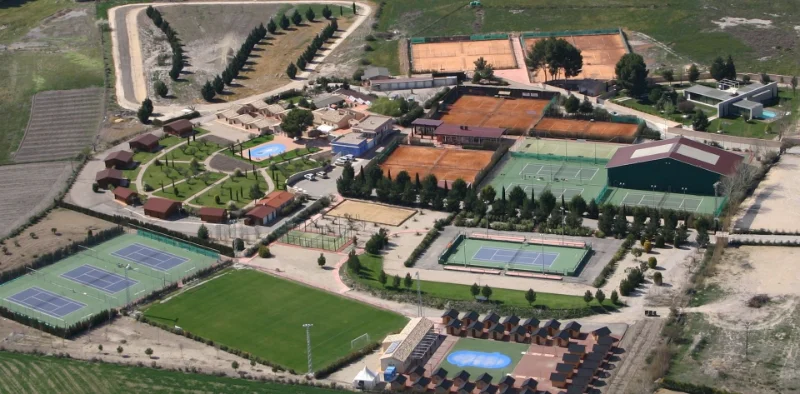 (Image source: Ferrero Tennis Academy)
This is the academy that produced Carlos Alcaraz. Founded in 1990 by Antonio Martinez Cascales (Ferrero's longtime coach), the Equelite campus sprawls across 12 hectares in Villena, a small town 30 minutes inland from the Alicante coast.
Former world No. 1 Juan Carlos Ferrero still lives on-site and actively coaches.
Facilities:
Tennis courts | 19 total: 10 clay, 8 hard, 1 indoor |
Padel courts | 5 (3 indoor, 2 outdoor) |
Other | Gym, running track, 2 swimming pools, 9-hole amateur golf, football field, beach tennis area |
Services | Physiotherapy clinic, hotel, restaurant, academic school |
What sets Equelite apart from most academies is that it hosts professional tournaments. The ATP Challenger Tour stops here annually (the first Challenger event in Alicante since 1996), along with ITF J300 Villena - Spain's most important junior tournament - and Tennis Europe U14/U16 events. Students regularly get to watch (and sometimes compete against) touring professionals without leaving campus.
The academy trains around 55 year-round students at 33-38 hours per week. Notable alumni include Alcaraz, Pablo Carreno Busta (career-high ATP No. 10), Nicolas Almagro (ATP No. 9), and David Ferrer (ATP No. 3). Maria Sharapova and Dinara Safina have also done extended training here, too.
Annual program cost: approx. 48,000 euro (includes tennis, school, accommodation, and meals).
2. Rafa Nadal Academy (Manacor, Mallorca)
https://www.rafanadalacademy.com/
You can book Rafa Nadal Academy tennis camps and programs through Pelotista.
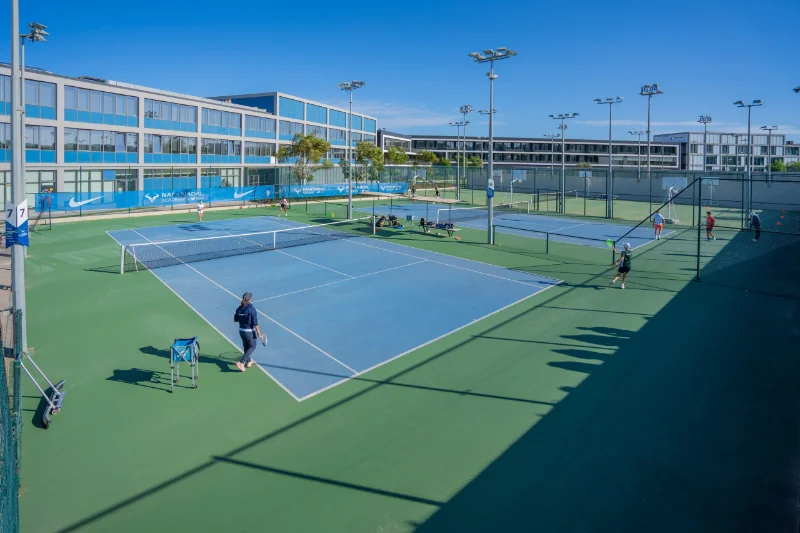 (Image source: Rafa Nadal Academy)
Opened in 2016 with Roger Federer attending the inauguration, the Rafa Nadal Academy is the largest and most recognizable tennis training facility in Spain. It sits on the outskirts of Nadal's hometown of Manacor, about 45 minutes from Palma airport.
Facilities:
Tennis courts | 45 total: 23 hard (4 indoor, 19 outdoor), 22 clay (7 covered, 15 outdoor) |
Padel courts | 12+ (indoor and outdoor) |
Other | Technogym-equipped gym with 200+ directed activities per week, crossfit center |
Swimming | Indoor 25m pool, outdoor 25m pool, recreational pool |
Services | Spa/wellness center, sports medicine clinic, Rafa Nadal Museum, Grand Slam-themed restaurants, shop |
The museum alone draws around 600,000 visitors per year and houses memorabilia donated by Michael Jordan, Tiger Woods, Federer, Usain Bolt, and Serena Williams alongside Nadal's trophies.
The academy runs a full international school (4-18 years, Anglo-American curriculum, 430+ students from 45 nationalities) that awards both an American High School Diploma and the Spanish Bachillerato.
Technical direction comes from Carlos Moyá (former world No. 1), with Toni Nadal (uncle and ex-coach) overseeing the academy's standards.
Casper Ruud trained here before his rise to ATP No. 2. Felix Auger-Aliassime, Alex Eala (junior US Open champion), and Bianca Andreescu have also used the facility.
Annual junior program: approx. 56,000-62,000 euro/year (boarding, meals, school, training).
Adult weekly camps: from 804 euro/week (tennis + fitness) to 1,499+ euro/week for premium packages.
The scale and prestige are hard to match, though the sheer size means the experience is less intimate than smaller academies.
3. Valencia Tennis Academy (Valencia)
https://valenciatennisacademy.com
You can book Valencia Tennis Academy programs and camps through Pelotista.
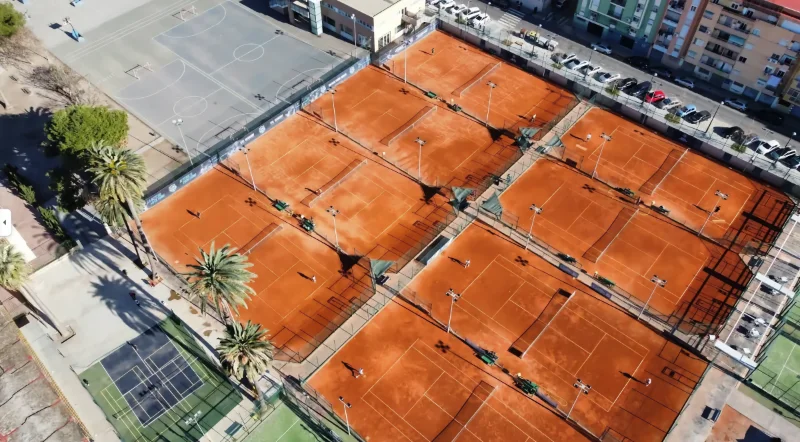 VTA sits 200 meters from Malvarrosa Beach in Valencia, inside the CM Valencia Tennis Center grounds. Founded in 2011, it's a smaller operation than the academies above, but the coaching approach is quite serious.
Facilities:
Tennis courts | 9 total: 8 clay (with lighting), 1 hard |
Padel courts | 8 (glass-walled outdoor) |
Other | Gym, racket shop, cafe with terrace, study rooms, relaxation areas |
Programs | Camps, groups, individual training |
Services | Physiotherapy (30+ years specialist experience), video analysis, asisstance with accommodation and transfers |
The head coaches have credentials that are well above the academy's modest size. Founder Sergio Dronov shaped the careers of Ernests Gulbis (ATP No. 10, 6 titles), Igor Andreev (ATP No. 18), and Alisa Kleybanova (WTA No. 20).
Head coach Juanse Martinez has worked with Albert Montanes, Guillermo Garcia Lopez, and Dusan Lajovic. Coach Carlos Calderon has trained Pedro Martinez, Pablo Andujar, and Marcel Granollers.
Programs are built around small groups (2-4 players per coach), with video analysis used to create individualized training plans. The beachside location and Valencia's relatively affordable cost of living make it an attractive option for players looking for high-level clay court coaching without the premium price tag of Barcelona or Mallorca.
Junior full-day program: approx. 500-600 euro/week. Monthly rates available from 1,300-1,800 euro.
4. Emilio Sanchez Academy (Barcelona)
https://emiliosanchezacademy.com/barcelona
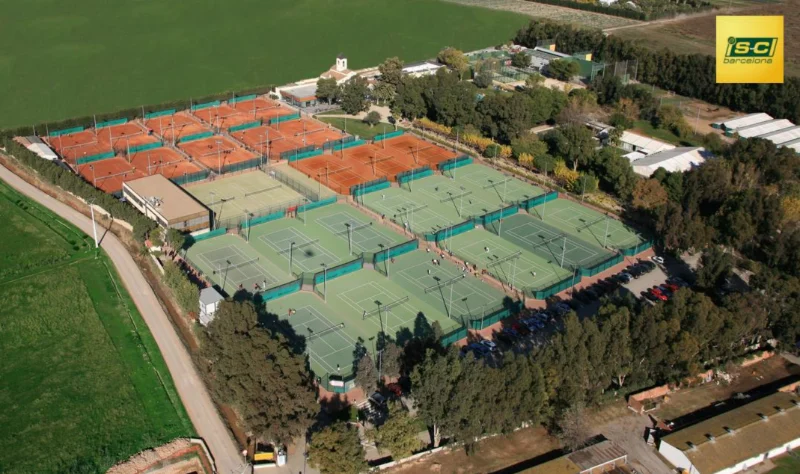 (Image source: Emilio Sanchez Academy)
Founded in 1998 by Emilio Sanchez Vicario and Sergio Casal - a doubles partnership that won the US Open (1988), French Open (1990), and an Olympic silver medal (1988) - this academy near Castelldefels has trained more future professionals than almost any other in Europe.
Facilities:
Tennis courts | 27 total: 13 clay, 6 Australian hard, 6 GreenSet, 2 grass |
Padel courts | 8 |
Other | Swimming pool, football field, basketball court, beach volleyball court, gym with personal training |
Services | ES International School, La Masia restaurant, 24-hour security, apartments/bungalows/residence |
The alumni list reads like an ATP/WTA hall of fame: Andy Murray, Svetlana Kuznetsova (decade-long stint), Grigor Dimitrov, Ana Ivanovic, Johanna Konta, Maria Sakkari, and Daniela Hantuchova all trained here.
The academy uses a proprietary coaching methodology called ASC360Tennis, with court instruction at a ratio of roughly 2 coaches per 3 students.
Located 20 minutes from Barcelona and 5 minutes from the airport, it's one of the most accessible high-performance academies in Spain. The grass courts are a rare bonus - very few academies outside the UK offer them.
Full-year boarding program: from approx. 40k euro/year.
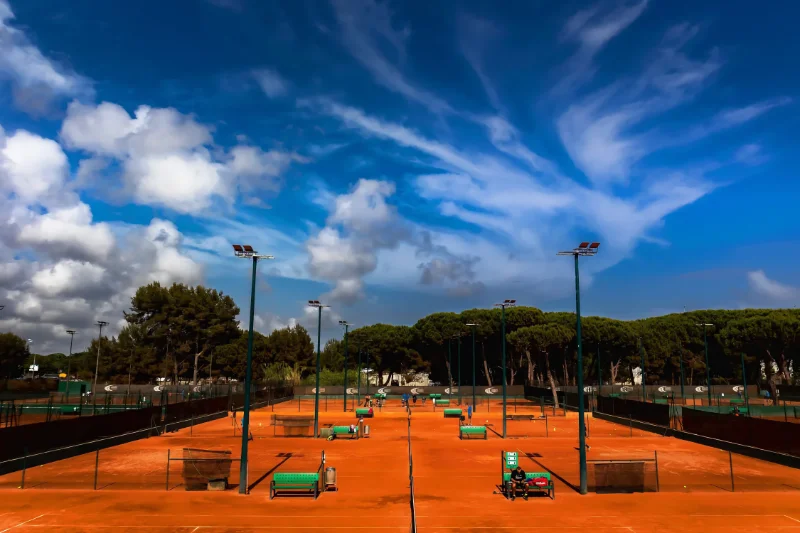
5. Barcelona Tennis Academy (Castelldefels, Barcelona)
 (Image source: Barcelona Tennis Academy)
BTA is the opposite of a mega-academy. Founded around 2010 and now in its 15th year, it's a small, family-run operation based at the Andres Gimeno Tennis Club in Castelldefels - a beachside town 10 minutes from Barcelona airport. The coaching approach is built on tight ratios: typically 2 players per coach on court, which is hard to find at this price point.
Facilities:
Tennis courts | 21 clay courts, 1 greenset |
Padel courts | 11 courts |
Other | Gym (outdoor and indoor) |
Services | Residence, restaurant (nutritionist-designed meals), study and recreation rooms, education center (ESO + Baccalaureate) |
BTA has expanded to two additional branches. BTA Can Via adds 5 clay and 6 GreenSet courts, a 25-meter pool, physio suite, residence, and a restaurant - making it a more self-contained campus for year-round students. BTA
Sitges offers a smaller setup (3 clay courts) alongside a golf course and two pools, mostly for individual adult sessions.
Full-time annual students get 20+ hours of weekly tennis and fitness training across five days. Academic programs are handled through partnerships with the British College of Gava (in-person) or online options including the e-Athletes and USPA programs.
Directed by Raphael Maurer (Switzerland) with head coach Jordane Doble (France), BTA doesn't have the marquee alumni list of Sanchez-Casal or Equelite, but it has built a steady reputation for developing European junior talent through personalized attention rather than volume.
Annual program: approx. 24,500 euro/year (tennis + accommodation), and apporx. 34,000 euro with school included.
Beyond the marketing brochures
A few practical things to consider:
Surface matters. If you are training for the European clay season, prioritize academies with mostly clay courts (VTA, Equelite, Sanchez-Casal). If you need all-surface preparation, the Rafa Nadal Academy's 45-court mix or Sanchez-Casal's rare grass courts are better fits.
Size affects experience. The Rafa Nadal Academy is a world-class facility, but with 45 courts and hundreds of students, the experience is very different from a 40-student academy like VTA.
Smaller academies tend to offer more coaching attention per player.
Check the coaching, not just the name. A famous founder doesn't guarantee the coach you'll actually work with is any good. Ask who will be on court with you daily, what their playing/coaching background is, and what the player-to-coach ratio looks like in practice.
Budget. Full-year boarding programs in Spain range from EUR 25,000 to EUR 62,000 depending on the academy. Weekly adult camps start around EUR 450-800. Factor in flights, equipment, tournament entry fees, and spending money.
Quick comparison
Academy | Location | Courts | Surfaces | Annual cost (approx.) | Best for |
Ferrero Academy | Villena, Alicante | 19 tennis + 5 padel | Clay, hard, indoor | ~ 48,000 euro | Competitive juniors, high-performance track |
Rafa Nadal Academy | Manacor, Mallorca | 45 tennis + 12 padel | Clay, hard, indoor | ~ 56,000-62,000 euro | Full-service experience, international school |
Valencia Tennis Academy | Valencia | 9 tennis + 8 padel | Clay, hard | ~ 1,600-1,800 euro/month | Personalized coaching, value for money |
Emilio Sanchez Academy | Barcelona | 27 tennis + 8 padel | Clay, hard, Greenset, grass | ~ 41,000 euro | Multi-surface training, proven track record |
Barcelona Tennis Academy | Castelldefels, Barcelona | 22 tennis + 11 padel | Clay, greenset | ~ 34,000 euro | Personalized coaching |
Bottom line
Spain's tennis academies range from global brands with museum-grade facilities to focused coaching operations where the founder still watches every practice session.
The right choice depends on your goals, your budget, and honestly - player's personality. Some players enjoy a 45-court campus with hundreds of peers; others need the intensity that only comes from a small group where there's nowhere to hide.
What's consistent across all of them is the Spanish coaching philosophy: build the game from the ground up on clay, develop physical and mental toughness through repetition, and compete constantly. It's the approach that produced Nadal, Alcaraz, Ferrer, and Muguruza.
And with over 300 sunny days, you probably won't lose many training days to bad weather conditions.


