
How to choose a junior tennis racquet

Choosing the right tennis racquet for a child is one of the most important decisions you'll make at the start of their tennis journey. The correct racquet helps develop proper technique, builds confidence, and reduces the risk of injury. The wrong one can slow progress and create bad habits that are hard to fix later.
Before looking at racquet sizes by age, it's important to understand the key factors that define a racquet and how they affect a young player's game.
What to consider before choosing a junior racket
When selecting a racquet for a junior player, there are four main elements to consider:
1. Racquet type
2. Strings
3. Frame material
4. Grip size
Each of these plays a role in how the racquet feels, performs, and supports a child's development.
1. Racquet types for juniors
Power Racquets
Power racquets are usually lighter, have larger head sizes, and are strung at lower tension. This makes it easier for beginners to generate power and get the ball over the net.
Best for: beginner players who are still developing coordination and swing technique.
Control Racquets
Control racquets are heavier and have smaller heads. They allow players to place the ball more precisely and generate spin more easily, but require better technique and strength.
Best for: advanced junior players with solid fundamentals.
Versatile Racquets
Versatile racquets combine elements of power and control. They offer a balanced feel and are often considered the best option for growing players who are transitioning to a higher level.
Best for: intermediate players.
Spin Racquets
Spin-focused racquets are lighter with medium-sized heads, designed to help players create heavy topspin and sharp angles.
Best for: juniors who already swing confidently and want to develop spin-based shots.
2. Strings
Strings matter just as much as the racquet itself. One of the easiest ways to compare strings is by gauge, which refers to thickness.
• 15 / 1.40 mm – Very thick, extremely durable, best for advanced players
• 16 / 1.30 mm – Durable and controlled, ideal for competitive juniors
• 16L / 1.28 mm – Balanced power and control (common in Luxilon strings)
• 17 / 1.25 mm – Comfortable and powerful, great for beginners and intermediates
• 17L / 1.20 mm – Thin, offers excellent touch and feel
• 18 / 1.15 mm – Very thin, maximum feel, least durable
For most junior players, thinner and more comfortable strings are the better choice.
3. Frame materials
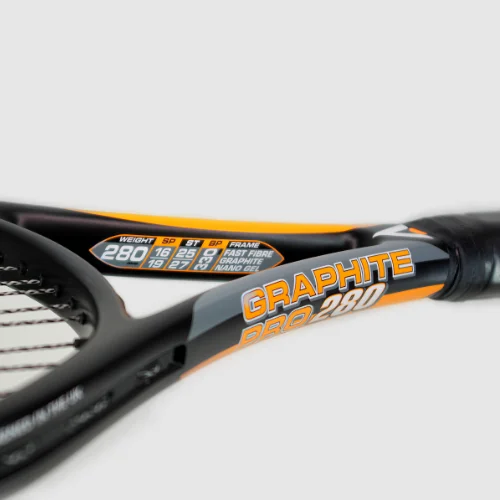
Junior racquets are typically made from one of three materials:
Aluminum
• Very light and affordable
• Less durable
• Provides limited power
Best for beginners and very young players.
Aluminum + graphite hybrid
• More durable than aluminum
• Lighter than full graphite
• Good balance of price and performance
A great middle-ground option.
Graphite
• Most durable and stable
• Best performance and feel
• More expensive
Recommended for serious junior players who train and compete regularly.
4. Grip size
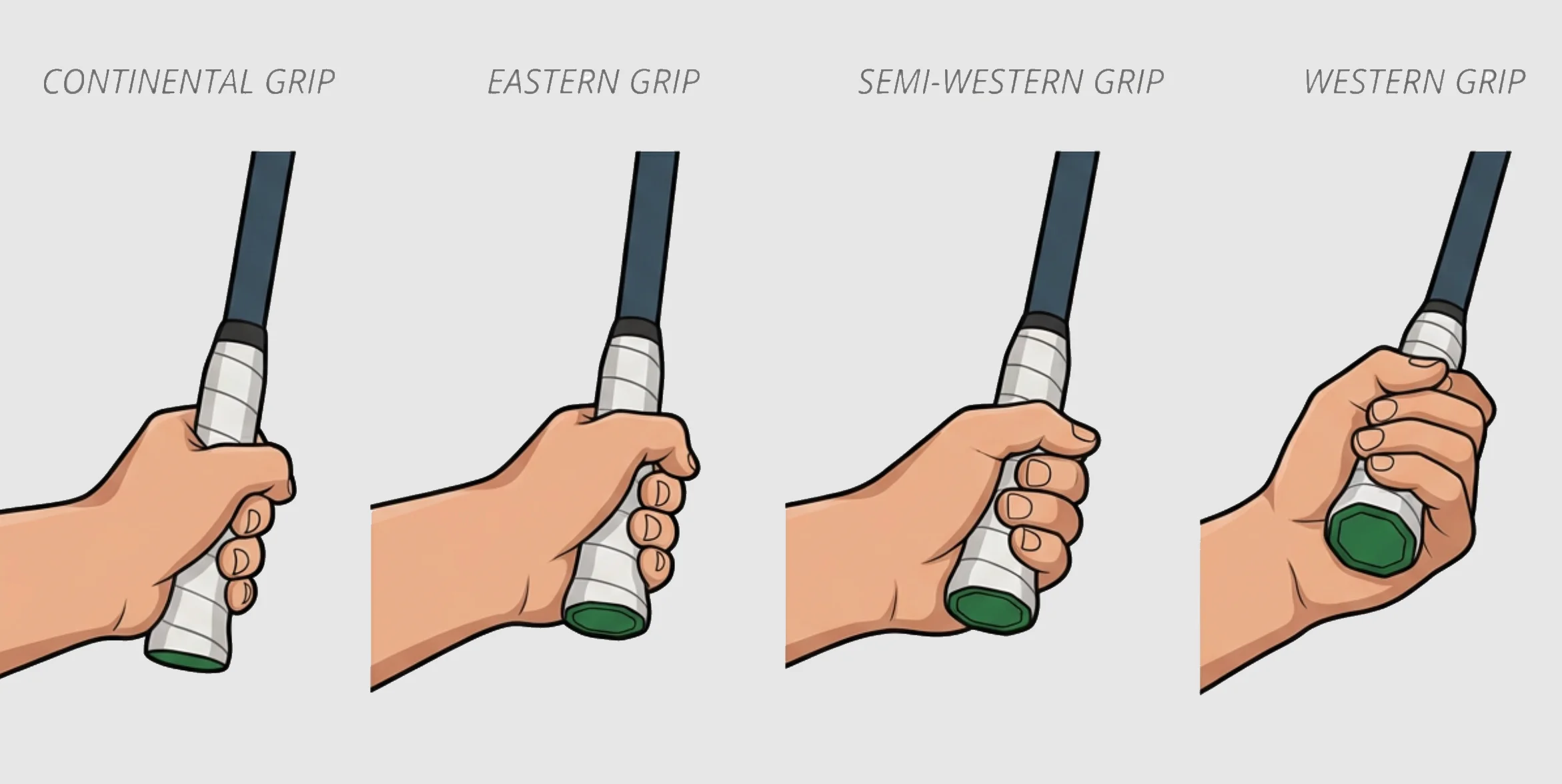
Grip size is often overlooked, but it's essential for comfort and injury prevention.
Checking grip size:
1. Look at the number on the bottom of the racquet handle:
• 0 = 4"
• 1 = 4 ⅛"
• 2 = 4 ¼"
• 3 = 4 ⅜"
• 4 = 4 ½"
• 5 = 5"
2. Hold the racquet using a continental grip (this grip is like when you shaking hands with someone).
3. There should be a small space between your fingers and palm.
• If fingers touch the palm → grip is too small
• If there's too much space → grip is too big
What racquet size should a child use?
Using the correct racquet length from the beginning is critical. A racquet that is too long or too short can lead to poor technique and increase injury risk.
Junior racquets are any racquet shorter than 27 inches. While every child is different, these are general guidelines:
• Under 5 years: 19" or smaller
• Ages 5–8: 21" or 23"
• Ages 9–10: 25"
• Ages 10+: 26"
Recommended racquets by age
Under 5 Years – Babolat Nadal Junior
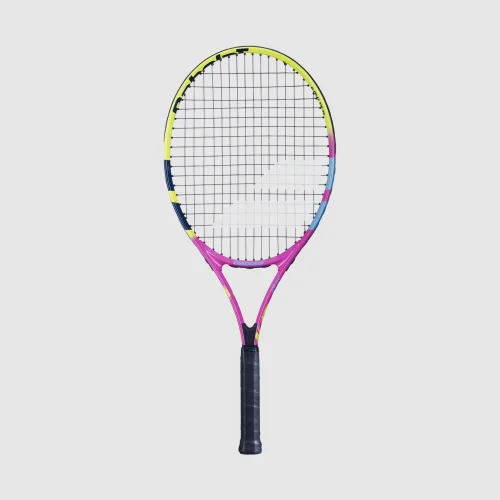
An excellent choice for very young players. The wide head provides a large margin for error, and the aluminum frame keeps it light and easy to swing.
Specs
• Head size: 82 sq in (529 cm²)
• Weight: 6.1 oz (173 g)
• Length: 19"
• Material: Aluminum
Ages 6–8 – Head Speed Junior 21"
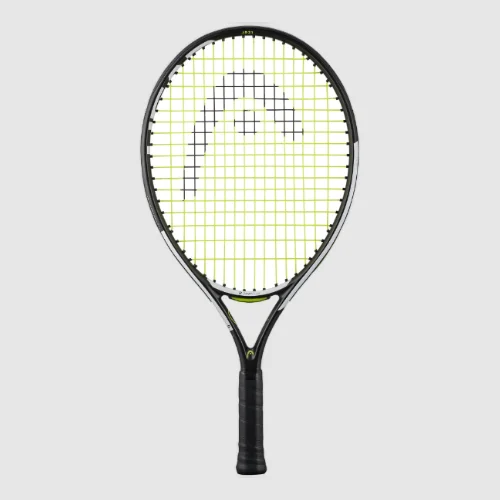
Lightweight graphite composite racquet designed for speed and control. Shock absorption technologies improve comfort and stability.
Specs
• Head size: 82 sq in (529 cm²)
• Weight: 6.1 oz (173 g)
• Length: 21"
• Material: Graphite composite
Ages 9–10 – Babolat Drive Junior 24"
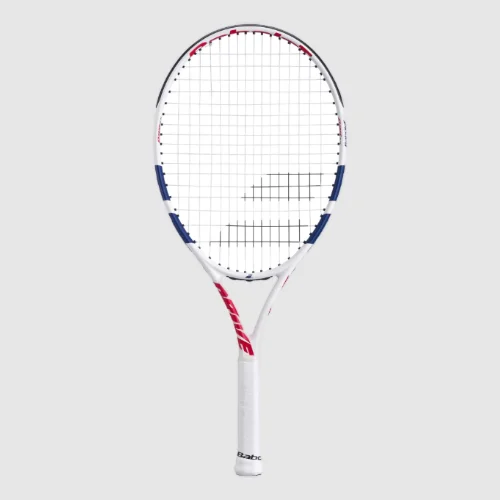
A full graphite racquet with excellent control and feel. The 100 sq in head provides forgiveness while allowing proper stroke development.
Specs
• Head size: 100 sq in (630 cm²)
• Weight: 8 oz (220 g)
• Length: 24"
• Material: Graphite
Ages 9–10 – Wilson Clash 25"
Features a flexible frame with FreeFlex and StableSmart technologies, offering comfort, control, and power.
Specs
• Head size: 100 sq in (645 cm²)
• Weight: 8.5 oz (240 g)
• Length: 25"
• Material: Graphite
Ages 10+ – Head Gravity Junior 26"
Lightweight, stable, and durable. Designed to reduce vibration and help growing players transition smoothly toward adult racquets.
Specs
• Head size: 100 sq in (645 cm²)
• Weight: 8.8 oz (250 g)
• Length: 26"
• Material: Graphite
Ages 10+ – Dunlop CX 200 Junior 26"
A premium junior racquet with excellent feel and control. Ideal for young competitive players.
Specs
• Head size: 100 sq in (645 cm²)
• Weight: 9.2 oz (261 g)
• Length: 26"
• Material: Graphite
These guidelines are a starting point, not strict rules. The most important factor is your child's skill level, not just age. A child who trains regularly and plays matches may be ready for a slightly longer racquet sooner than recommended.
When in doubt, consult your local tennis coach. A coach can evaluate technique, strength, and coordination to ensure your child uses the right racquet at the right time.
Choosing wisely now will help your child enjoy tennis more - and develop correctly for the future.

