
Best tennis balls for hard courts

Once you've chosen a racket that suits your level and playing style, the next logical question is often overlooked: which tennis balls should you use for different surfaces?
It may sound like a small detail, but the right ball can hugely affect how the game feels, especially on hard courts.
Manufacturers constantly try to preserve a balance between comfort, durability, and performance. While there are balls marketed as "all court" there are also balls specifically designed for each surface - and the differences are not just a matter of personal preference.
Why court surface matters
Tennis is played all year round and in very different conditions. Summer heat, winter cold, outdoor courts, indoor halls - most players don't stick to a single surface. Between tournaments, friendly matches, holidays, and training sessions at different clubs, we are constantly switching courts.
Professional tennis follows this same logic.
The season starts with the Australian Open, played on fast hard courts. In spring, players move to clay for Roland Garros. Then comes Wimbledon, played on natural grass. The year finishes with the US Open, again on hard courts.
Before each Grand Slam, players compete in smaller tournaments on the same surface to adapt their game. That's where expressions like "clay season" or "hard court season" come from.
Globally, most tournaments are played on hard courts, followed by clay. Grass courts are rare, mainly because they require much more maintenance. Hard courts are easier to maintain and enjoyable for a wide range of players - but they are also the most demanding on equipment, especially tennis balls.
Do you really need different balls?
The racket stays the same regardless of surface. You might adjust string tension or type as your level improves, but that's another topic.
Balls, however, should ideally match the surface.
On clay, balls wear more slowly.
On grass, wear is minimal.
On hard courts, wear is significant.
That's why choosing the right ball matters most on fast surfaces.
How to choose
There are many myths about tennis ball manufacturing - one of the most common being that all balls are made in the same factory. That simply isn't true. Different brands use different factories, materials, and technologies, and research never stops. The goal isn't only to reduce costs, but also to improve performance and playing feel.
A tennis ball has two main components:
• the rubber core
• the felt
The felt is what suffers the most. Every hit, every spin, every bounce deforms the ball slightly. Over time, the felt determines how long the ball keeps its quality.
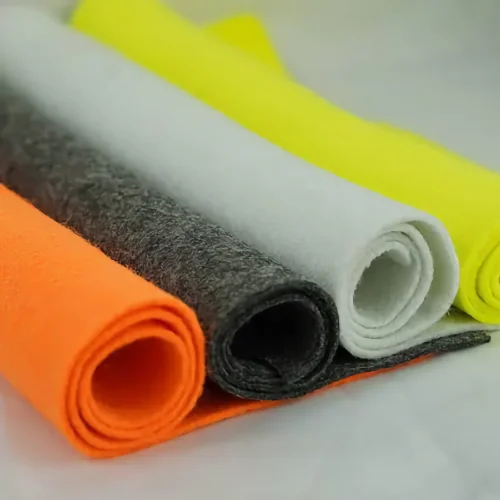
Felt types
• Synthetic felt – cheaper, wears faster
• Natural wool felt – more expensive, lasts longer, and offers better feel
You'll usually see this information printed on the can:
• Extra Duty – natural felt (recommended for hard courts)
• Regular Duty – synthetic felt
Types of tennis balls
• All Court balls – natural felt with a water-repellent coating
• Championship balls
• Basic / training balls
Most major brands offer balls specifically designed for hard courts, and for good reason.
Hard courts wear off balls faster
Hard courts are painted with acrylic mixed with fine sand. In simple terms, it's like playing on sandpaper. Every bounce grinds the felt down.
Clay-court balls receive special treatment so they don't absorb moisture. Hard-court balls don't need this treatment, but they do need stronger felt to survive the abrasion.
Rubber technology also plays a huge role. Modern balls are made using complex chemical processes to combine elasticity with durability. A low-quality ball will lose pressure quickly, even if the felt looks fine.
If you're not a professional, a basket of good balls can last weeks. Poor-quality balls, however, can lose pressure after just a few sessions.
Court surface is only one factor. Our replacement guide explains how long tennis balls last for recreational play, competitive training, and ball machines.
Our choice for tennis balls for hard courts
Dunlop Fort / Dunlop ATP / AO Dunlop
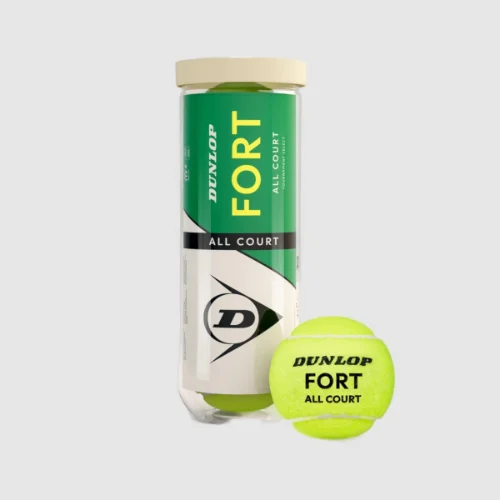
Among the best on the market. Expensive, but excellent quality. Dunlop has its own factories and deep expertise in rubber technology.
Wilson US Open
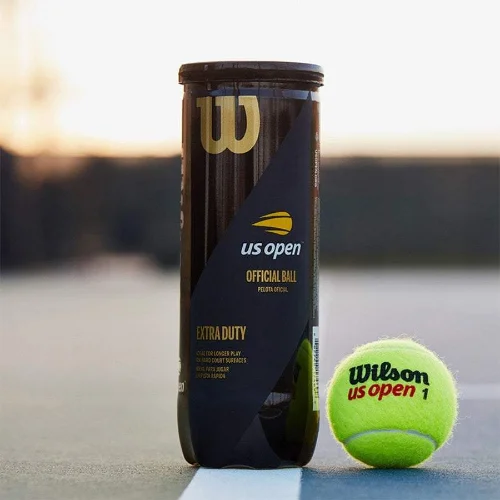
Used at many Grand Slam tournaments. Performs extremely well on hard courts.
Head Tour
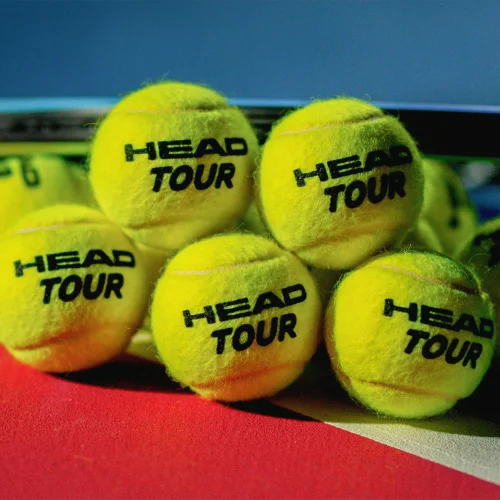
Very consistent quality. Widely used in ATP and WTA tournaments, especially on hard courts.
Tecnifibre ONE
Manufactured in collaboration with Bridgestone, experts in rubber development. Used in many tournaments worldwide.
Slazenger
The official Wimbledon ball. Excellent quality and feel.
Tretorn
Innovative brand using a pressureless core filled with microcell foam instead of air. This allows the ball to maintain pressure longer, but changes the feel at impact. Some players like it, others struggle to adapt. It's a matter of habit.
Ball pressure
Tennis balls are stored in pressurized cans so they maintain their bounce before use. Once the can is opened, pressure slowly escapes with every hit.
Professional players hit so hard that balls often become unusable after a single session. Recreational players can reuse balls for many sessions - especially if they play frequently.
If balls are left unused for more than a week after opening, pressure loss becomes noticeable. There are pressure-preserving containers on the market that help extend ball life, and they can be a good investment.
Final thoughts
Using hard-court specific balls is recommended - but not mandatory.
If your level allows it, you'll feel the difference in touch, control, and consistency.
If you're a beginner, a junior player, or playing casually, the difference may be minimal.
For competitive players and high-level amateurs, choosing the right ball matters more. In tournaments, the ball brand and model are always specified in advance. Training with the same balls helps avoid unpleasant surprises on match day.
When buying tennis balls, price is also an important factor. Promotions often make premium balls more accessible, so it's worth comparing.
Can you use all-court balls on hard courts?
Yes. You can even use clay balls - but if you have the option, using balls designed specifically for hard courts will always be the better choice.

